Finding Your Place in Science
Welcome to ESWI Airborne: Shaping the Future of Respiratory Virus Research. In this episode, we speak with two outstanding researchers whose work is shaping the future of influenza and respiratory virus science. This conversation forms part of our three-part series on life as a scientist. Our guests are two recent ESWI Conference prize winners:
Dr Kevin Ciminski, recipient of the Claude Hannoun Prize for Best Body of Work. He leads an independent research group at the Institute of Virology, University Medical Center Freiburg in Germany, where he studies virus–host interactions of emerging zoonotic influenza viruses.


Dr Marios Koutsakos, awarded the Young Scientist Vaccine Innovation Award. He is a Group Leader at the Doherty Institute in Melbourne, Australia, focusing on influenza B viruses, immune imprinting, and developing broader and more durable influenza vaccine strategies.
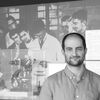
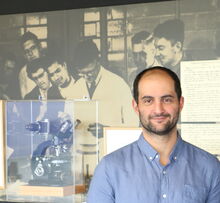
Together, they explore what it means to build a scientific career, define a niche, establish a laboratory and contribute to an international research community. They reflect on the pivotal moments that drew them into virology, the balance between specialised research and big-picture questions, and the skills that have mattered most in their professional growth. They also share lessons learned from mentors and consider where early career scientists can make the greatest impact in the decade ahead.
ESWI Secretariat : 0:00
Welcome to ESWI Airborne. In this series featuring our early career scientists community, we explore how the next generation is shaping the future of respiratory virus research. This series is made possible thanks to the kind support of CSL Seqirus and Sanofi Pasteur.
Jane Barratt (Host): 0:40
Welcome to ESWI Airborne, the podcast of the European Scientific Working Group on Influenza. I'm Jane Barrett and have the great pleasure of hosting today's conversation. ESWI is a community built on evidence, curiosity, and collaboration. Today, in our Early Career Scientists series, we highlight two people who will certainly help to shape the next decades of influenza and respiratory virus research. The winners of Claude Hannoun Prize for Best Body of Work, Dr. Kevin Ciminski, and the Young Scientist Vaccine Innovation Award recipient, Dr. Marios Koutsakos. We are really wanting their views about what it means to build a scientific life, finding your niche, shaping a lab, developing critical skills, and contributing to a global scientific community. So let's start with some introductions of our experts. Kevin Ciminski is an independent research group leader at the Institute of Virology at the University Medical Center Freiburg in Germany. His work focuses on virus host interactions of emerging zoonotic influenza viruses with particular interest in how these viruses adapt, trigger immune responses, and drive immunopathology. Welcome, Kevin. It's good to have you with us today. And also, we have the great pleasure of talking with Marios, who is a group leader of the Doherty Institute in Melbourne, Australia, where he leads research on influenza B viruses, immune imprinting, and the development of broader and more durable influenza vaccine strategy. His primary work in the molecular virology and antigenic evolution of influenza B, followed by postdoctoral research into immunity following influenza on SARS-CoV-2 vaccination or influenza. So welcome to both of you. It's good to have you here. And Kevin, you're coming from Germany, and Marios, you're in my home country of Australia, I understand. Is that right?
Marios Koutsakos: 2:53
Correct, yes.
Jane Barratt (Host): 2:55
Good. And Kevin, Germany?
Kevin Ciminski: 2:57
Germany is right, yes. Thanks for the introduction, Jane.
Jane Barratt (Host): 3:01
Good pleasure. Look, let's first of all just to unravel the core mechanisms. And this question goes to both of you. What single fundamental question about your viruses or immune imprinting are you currently most focused on? So, Kevin, let's start off with you.
Kevin Ciminski: 3:21
Yeah, as you just mentioned, I just got recently funded for deciphering the interplay of influenza viruses and the immune system. So, what is my main interest right now is how influenza viruses infect macrophages, as one of the immune cells that are at the center of infection, and how infection of these macrophages shapes the immune response. So we want to understand how the infection can lead to immunopathology and what we can learn in order to interfere with severe causes of illness triggered by exacerbated disease, by macrophages releasing cytokines.
Jane Barratt (Host): 4:13
Well, congratulations on the grant. That's probably well deserved. So, Marios, let's turn to you on immune imprinting. Tell us a little bit about what are the single fundamental questions that you're really researching.
Marios Koutsakos: 4:26
Yes, our recent findings suggest that some people have somehow over their lifetime developed antibodies that are broadly protective against many different variants of influenza B viruses. And so we're trying to understand how that kind of immunity develops and what part of the viruses these antibodies target, and then how can we instruct the immune system to do the same using vaccines so we can establish broadly protective immunity against influenza B viruses?
Jane Barratt (Host): 4:57
Question without notice. I'm really interested. You know, you are at the forefront of science, both of you. But how is that going to impact populations in the end? Would you like to make a comment of that? Either Kevin or Marios?
Marios Koutsakos: 5:14
Sure, yeah. Kevin, go ahead.
Kevin Ciminski: 5:17
I mean, we have these zoonotic infections right now everywhere around the globe with avian influenza viruses, for example, because they are globally spreading, they are now in dairy cattle, and this leads to ever increasing numbers of humans being infected with avian influenza. And these avian influenza viruses are well known to, for example, infect macrophages, leading to the severe cases of disease. And we still don't know why, but it is somehow related to macrophages. So if we understand what is responsible for the severe causes of disease, like what are the triggers, inflammatory responses, they would definitely open up some new therapeutic options, for example. Something that can be used to cure these individuals.
Jane Barratt (Host): 6:07
Okay, thanks. Marios, your perspectives?
Marios Koutsakos: 6:10
Yeah, I mean, our main goal is to try and reduce the impact, the clinical impact of influenza B viruses. So influenza B viruses have been generally overlooked compared to influenza A viruses, but they account on average for a quarter of influenza infections every year. The majority of those infections are in school-age children and adolescents, and in those age groups, influenza B viruses can develop severe complications and even cause fatal disease. And so our overarching aim is to try and reduce that burden for those populations.
Jane Barratt (Host): 6:44
You know, that's really interesting. I kind of sit in the latter half of life, so you know, in my work, so it's really interesting to hear that. So let's move on to you know, your scientific place. It's always fascinating to understand, Kevin, you know, why you chose this field. So your work on zoonotic and bat-derived influenza viruses really sits at a rare frontier. How did you choose this direction?
Kevin Ciminski: 7:11
Oh, that was actually by accident. So I was given a completely different PhD topic at the beginning of my scientific career, and I told my supervisor that I don't like this topic. It is not my topic. There was basically not a match. And then we sit together and we're discussing options, and then we came up with this bat influenza viruses. It was also one thing that people were working in our lab, and we identified that we basically don't know what the zoonotic potential of these bat flu viruses is. So we thought rather than focusing on this, at least to me, not so interesting topic, we should switch gears a little bit and go into the direction of the zoonotic aspect of these bat flu viruses.
Jane Barratt (Host): 8:02
So opportunistic, which is really not so rare, but it's an opportunistic focus. Now, what about you, Marios? How did you select this field or did you?
Marios Koutsakos: 8:17
Well, opportunistically as well, I would say. Serendipity for the most part. As an undergraduate student, quite a while ago now, I worked with Wendy Barkley for a summer research placement. And I think by chance I was given a project on influenza B viruses. And I thought that was quite interesting and captivating. But sort of starting to look into the project on influenza B viruses, I came to realize how overlooked influenza B viruses are and all the different questions that are that we have for influenza B, but we don't have answers to. And I think that sort of stayed with me for all that time since then.
Jane Barratt (Host): 8:56
It's very interesting, isn't it? So often it's opportunistic and not what you've planned. I want us to sort of step, zoom out now and talk about how science demands such deep expertise, but you really need a wide lens to be able to then focus on your particular subject area. How do you balance that focused approach with the broader question when you're dealing with respiratory virus science? So, Kevin, do you have any perspectives about that?
Kevin Ciminski: 9:33
Yeah, that's actually a good question. And so to me, a question is always interesting when you can explain it in simple words to your parents. So if they get the research question, I think it's an interesting research question. If you have to talk a lot, describe a lot, that's super complicated and people won't get it. And you probably are not able to create a bigger picture. So if I can create a big picture and describe a research project in simple words, I think that's a good research project. That's what we usually try.
Jane Barratt (Host): 10:07
Yeah, and Marios, you were nodding as Kevin was talking. Is that how you kind of deal with these zooming out and coming back in?
Marios Koutsakos: 10:17
Yeah, and also I think sometimes there might be questions that we are looking into for influenza B specifically, but influenza B doesn't exist in a vacuum, and we have to stay up to date with the influenza A field, and advances in that field can be applicable to influenza B. And also think the reverse, there might be more generalizable principles that come out of influenza B research that can inform influenza A. And in a broader respiratory virus I guess aspect a lot of the techniques we use to understand immunity to influenza viruses is directly applicable to other respiratory viruses. And that was something a lot of people utilized during the SARS-CoV-2 pandemic, where a lot of people pivoted from their influenza or other respiratory virus research to contribute to the SARS-CoV-2 pandemic.
Jane Barratt (Host): 11:08
You really have to be very adaptable, not only in your techniques, but responding to the environmental variants as well. So thank you. I want to go on to the transformative nature of your work. In the next five years, and five years goes very quickly, what's the single most transformative discovery you hope to publish? Well, we'll go to Marios first, what do you expect to be publishing on in five years?
Marios Koutsakos: 11:41
I mean, we hope to make advances in the design of broadly acting vaccines, as I mentioned, but one of the more exciting questions we're trying to address is whether influenza B viruses are really restricted to humans and to what extent they exist in animals. And I would like to think that in the next five years we have more conclusive answers to some of the questions we have at the moment. They're at more preliminary stages, but we have some exciting findings on that.
Jane Barratt (Host): 12:12
So we can expect some articles within the next five years from you and your team.
Marios Koutsakos: 12:19
I would hope so.
Jane Barratt (Host): 12:22
I need more confidence, Marios.
Marios Koutsakos: 12:24
I can't go on the record saying that I will publish that in five years, because what if I don't?
Jane Barratt (Host): 12:31
So, Kevin, you know what's the big transformative discovery of you and your team in the next five years?
Kevin Ciminski: 12:39
I think it will be about the role of macrophages. So we know these cells are around, they are important to clear infection, but they can also be responsible for driving disease. And I think we will definitely shed light on the role of macrophages and how the response of these cells is influenced by influenza viruses. So we have some good ideas, and we have the leading hypothesis here that depending on the virus, the macrophage response is different. So we hope to see that depending on the virus that is infecting these macrophages, we see different host responses.
Jane Barratt (Host): 13:22
So, Kevin, question without notice what about 10 years? Or where do you and your team expect to be in 10 years?
Kevin Ciminski: 13:31
In 10 years, we hope to apply all these insights we gained from studying bat viruses, bat influenza viruses, and influencing influenza viruses. We hope to apply all these insights, this information we gained to other emerging viruses, and there will certainly be more emerging viruses in the next 10 years because of all climate change, you name it, that will definitely lead to more zoonotic infections with different viruses, not necessarily restricted to influenza viruses. And we hope to like build a foundation of information that can be used to tackle these zoonotic viruses.
Jane Barratt (Host): 14:19
You know, you don't work in isolation. So now I want to talk a little bit about you know building a lab and a team and a scientific home. You know, Marios, you've grown your team at the Doherty Institute. One of the interesting things that I want to hear from you is how do you build this culture that's collaborative rather than competitive, or is it a bit of both?
Marios Koutsakos: 14:45
I would say it's generally more collaborative. The Doherty, I think, is designed to and to promote collaboration across different members. I guess what I find from my own collaborations is that they're generally based on mutual interests, and there's a lot of that in the Doherty when it comes to influenza. And so they start based on that and then they're built on and maintained by clear communication about what everyone's aims is, what everyone's expectations are, what goals we want to achieve together, and then how we go on to do that, and then also by respecting each other's expertise and points of views, but also I guess each other's times, everyone has a lot of things to do.
Jane Barratt (Host): 15:27
But it's a very driven profession, isn't it? You know, it's competitive in terms of you know getting your grants in and things like that. But it seems as though you work as a team to get that over the line.
Marios Koutsakos: 15:39
I find we can achieve more together than individually. The sum of the parts is greater than what's the saying? There's a saying.
Jane Barratt (Host): 15:49
Yep, the sum of the parts is greater than the whole. Yes, you're absolutely true. And Kevin, you were nodding, and this is, you've only just recently, you know, probably over the last couple of years, established your own research group. I want to know what you were completely unprepared for in developing this group. Was there anything that really surprised you in trying to bring people together?
Kevin Ciminski: 16:13
So people are always complaining about bureaucracy, and I'm facing it right now. I was unprepared, I had no idea. So this is really time consuming to get legal permissions and stuff, get in touch with all the responsible people just for hiring candidates. So this takes like forever. It's very time consuming and has not necessarily something to do with doing science.
Jane Barratt (Host): 16:46
And isn't that such the case? We're expecting scientists to actually be also admin people. It would be really helpful to be able to really focus all of your energies, on your passion, but that's not the case in this world today. Mentorships are really important in the development of young scientists. Has there been a single mentor that you can just bring to mind and what characteristics really inspired you to be who you are today? Marios?
Marios Koutsakos: 17:24
Yeah, I've been very fortunate to have great mentors throughout my career, both from my supervisors but also from peers. So I guess everyone provides a little bit of a different type of mentoring. My latest supervisor and mentor Stephen Ken has been very supportive of growing my independence and establishing my own team. And so I think that's been a very important, I guess, aspect of my development as an independent group leader. Not only by providing guidance and advice, but also by actively giving me opportunities to achieve and progress my goal. And that's something I try to bring in with my own team when I mentor and supervise them by trying to give them opportunities to achieve their goals.
Jane Barratt (Host): 18:12
It does take some courage to step back and create space for others. Absolutely. And so I think what you've talked about there is really a mentor that recognises the future of science, which is sometimes not so evident in our community. And Kevin, what about you? Is there a mentor that comes to mind and how did they support you in the development of your career?
Kevin Ciminski: 18:43
So if I would pick one single name, it would be my mentor during my PhD and early postdoc. He was really supportive, he was giving me all the freedom that is required to do science, and he was always challenging the hypotheses we came up in the lab, and he still does. We have a very good peer community here because of so many good scientists. So my mentor, but also the peer community here is really good in shaping the research questions, and that's something that really was helpful for becoming a good and independent researcher.
Jane Barratt (Host): 19:37
It struck me when you were talking that sometimes we need to sit with discomfort, you know, in continuing to ask the question of the question and unpack it. And not all scientists are prepared to do that. So to have a mentor that questions, and places you in an uncomfortable place, and search further is an ideal that you obviously take forward. We're now going to talk to the topics of community, collaboration, and the future. So when we talk about the community, what does the scientific community mean to you, especially in a global field? Because we all met at the recent ESWI Conference. So what does it do for you, this scientific community, and how helpful or not is it? Marios?
Marios Koutsakos: 20:36
Yeah, I think for me, the scientific community is a group of people with aligned interest in advancing the influenza field and a shared vision in having an impact that helps people against this virus. And I guess what I'm finding is that sort of aligned interest and shared vision brings people together. And I've been very fortunate to establish a variety of collaborations through those international meetings, I guess we saw.
Jane Barratt (Host): 21:06
You said that you've been very fortunate, and I want to turn the tables too, because we have been very fortunate to hear your work and the work of Kevin and other early career scientists, and that's how we generate inspiration from one another. This shared vision is so critically important in the field of science. So, Kevin, what does the scientific community mean for you?
Kevin Ciminski: 21:37
I mean, we are all sitting in the same boat, we're having similar interests, often similar interests. And I think what we learned during the pandemic is if we collaborate and combine forces, we can be very quick and very successful. And therefore, the scientific community is completely open, and I'm really happy to collaborate. And if you are open and you are keen to collaborate, at least my take has always been people want to get in touch with you, and there are often if you come back from meetings like this, as you have a ton of collaborations or research interests that could kick off a new project. So meeting these people, these scientists is always an inspiration, a source of inspiration.
Jane Barratt (Host): 22:31
I certainly agree, these conferences are so very important, and the ESWI gives the opportunity to exchange knowledge, but also, sit and understand where there's intersections of work. Where can early career scientists have the biggest impact in influenza and respiratory virus research over the next decade? Kevin, where do you think that we're going with this?
Kevin Ciminski: 23:01
This goes probably into Marios's direction. So if some early career scientists can design some vaccine against emerging pandemic strains, we are all safe. So I think vaccine approaches or some immune approaches to prevent emerging viruses is definitely a very hot topic. If you can control this one, yeah.
Jane Barratt (Host): 23:28
Yeah, Marios, perhaps if you can pick up on that, I'm really intrigued about your work in school children. I think this is an area that requires further attention. Do you see this, as research over the next decade?
Marios Koutsakos: 23:46
I mean, yeah, for sure. And I think the research using samples from children is inherently more complex in many ways. I think for me, one thing that I guess we need to be thinking more about the next decade is how to integrate more the different disciplines that we all work in. There's a lot of opportunities, and there's also a greater need, I think, for more interdisciplinary science. That includes more basic science, more translational science, more veterinary science, more zoonotic assessments, and more of the computational, I guess, aspects that we see coming up quite quickly over the last few years. So I think for me, finding better ways to integrate the interdisciplinary aspects of our science will be quite important.
Jane Barratt (Host): 24:37
Look, thank you. Now, if you're really talking to someone who's just starting their PhD or facing setbacks, what's the one piece of information, advice that you would impart? So take yourself back to when you were just starting, and what's the one piece of advice that you would say, ah, that helped me keep moving forward? So, Kevin, and then Marios?
Kevin Ciminski: 25:08
So when you start your PhD, you are highly motivated. That's good, and you need it. But you will very rapidly see that experiments fail. So you need to be very tolerant to frustration. And probably telling people that you do 90% of your experiments that are trash, they won't work, you will fail in 90%, but you do it for the 10% that work, and that will shed light on something no one ever has done before. So you need to go for the 10% that work out. So failure is good. It is necessary because you will see what doesn't work. It will teach you something, and then you have to rethink, recalibrate your research idea and your hypothesis, and then you go back and do another one.
Jane Barratt (Host): 26:01
I couldn't agree with you more. So, Marios?
Marios Koutsakos: 26:04
No, I agree as well. I think you know, finding a way to develop that resilience against the inevitable failure is key. And I think what helps there is remembering why you want to do this in the first place and what drives you to get up in the morning and go and try that experiment again and hope for the best, or yeah, I think developing that sense of resilience is the key.
Jane Barratt (Host): 26:31
I think people in your field must have resilience because it's really that 10% that you're looking for. Now, as we bring this podcast to a close, I'm going to ask both of you know what is the key message that you want, the audience to hear from you today? So let's start with Kevin first. Kevin, what's the one key thing that you want people to know from this podcast?
Kevin Ciminski: 27:01
Stay curious and stay open-minded. That's not only a take-home message for science, but I think for the entire life.
Jane Barratt (Host): 27:11
I'll take that one. Thank you. And Marios?
Marios Koutsakos: 27:14
I couldn't agree more. I think the open-mindedness and curiousness is fundamental to science and life. I guess the other thing that I would try to advise people is to believe in science and the work that people do. Don't believe everything else you hear out there, scientists do have the best interest in mind.
Jane Barratt (Host): 27:41
You know, you've both been an inspiration to me today. It's a great honor to be able to be in conversation with you both. As young scientists, you know, I am very hopeful for the future. What you've talked about is not only the essence of your work, but the people who you are. And there takes a certain, as we say, resilience and courage and tenacity to be who you are and to lead the teams that you do. So I want to thank both of you for your insights and the work that you're doing in advancing our understanding of influenza and respiratory viruses. And thank you to our listeners for joining us for this episode of ESWI Airborne. To learn more about ESWI and our community of scientists, clinicians, and public health leaders, visit eswi.org. We really do look forward to continuing, this early career scientist series with more voices shaping the future of our field. But today, we've had the great pleasure of talking with Dr. Kevin Ciminski and Dr. Marios Koutsakos. Thank you very much for your time today.
ESWI Secretariat : 29:01
ESWI Airborne is brought to you by ESWI, the European Scientific Working Group on Influenza and other acute respiratory viruses. These episodes would not be possible without the team's efforts, and we would like to extend special thanks to our ESWI Secretariat, our technical and IT teams, our arts team, and our host Jane Barrett. The podcasts are recorded virtually, and we thank our guests for their participation in this inspiring series. Talks are adapted to a global audience and are intended to be educational. For any specific medical questions you may have, these should be addressed to your local general practitioner. Many thanks to our sponsoring partners, and thank you for listening.