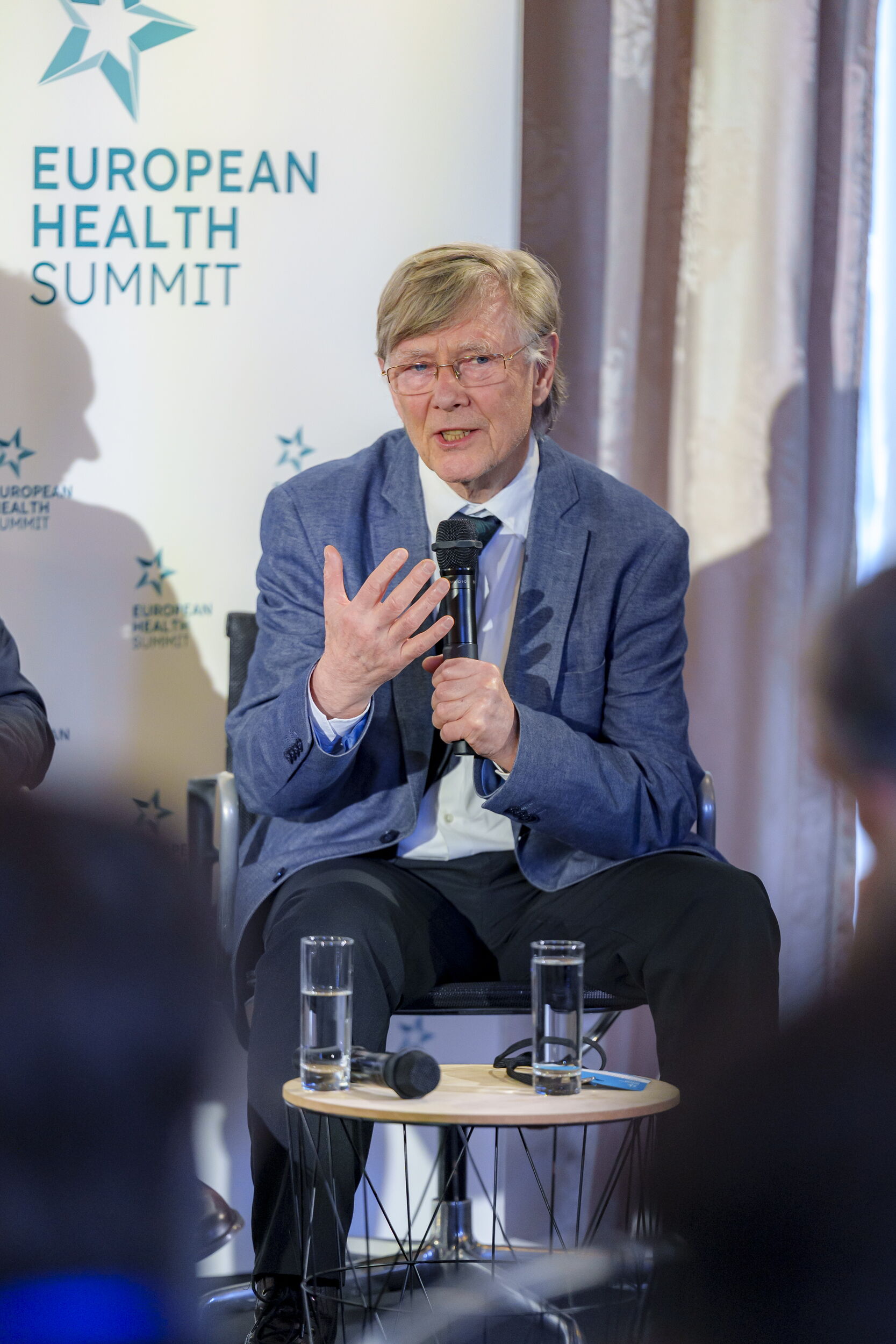
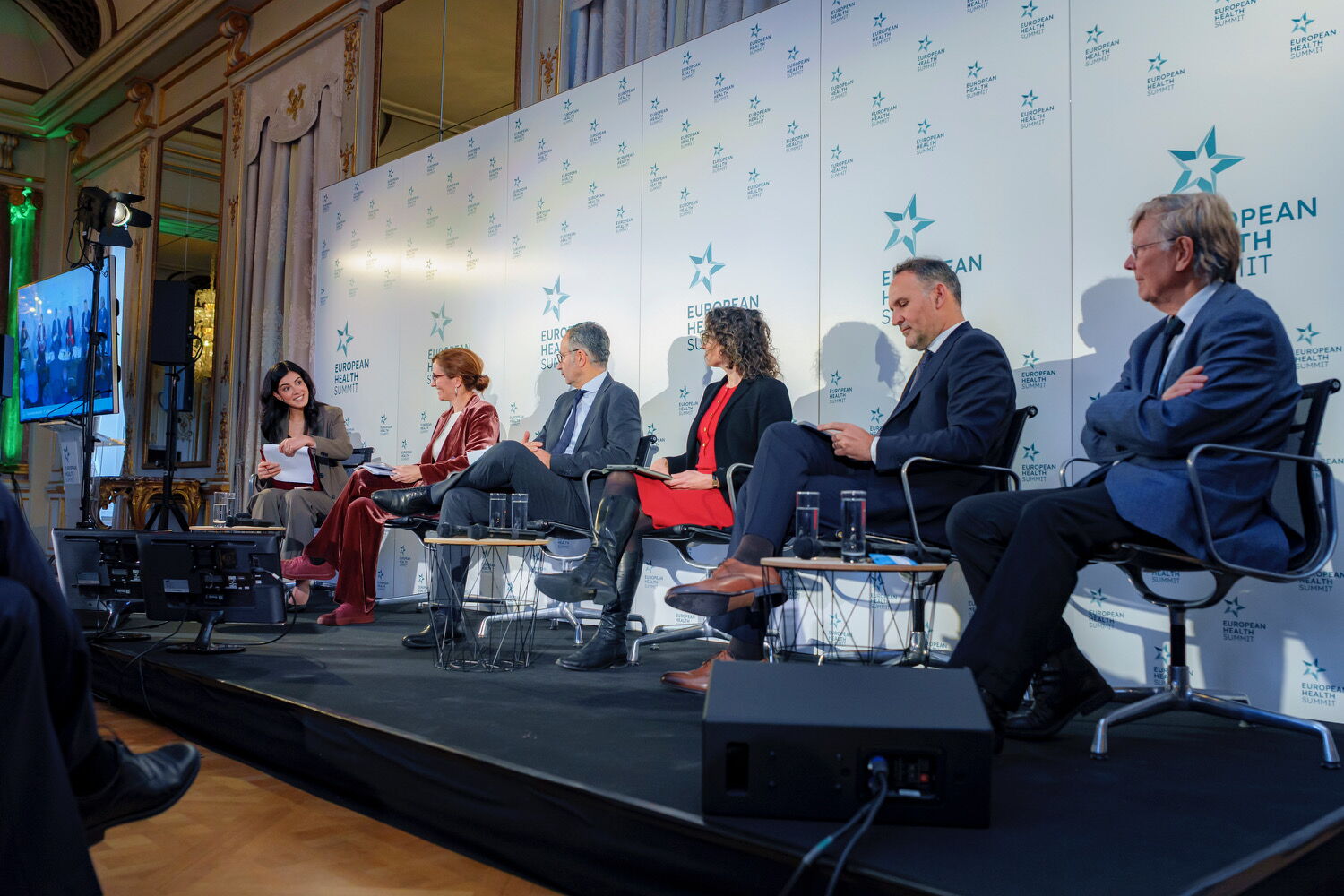
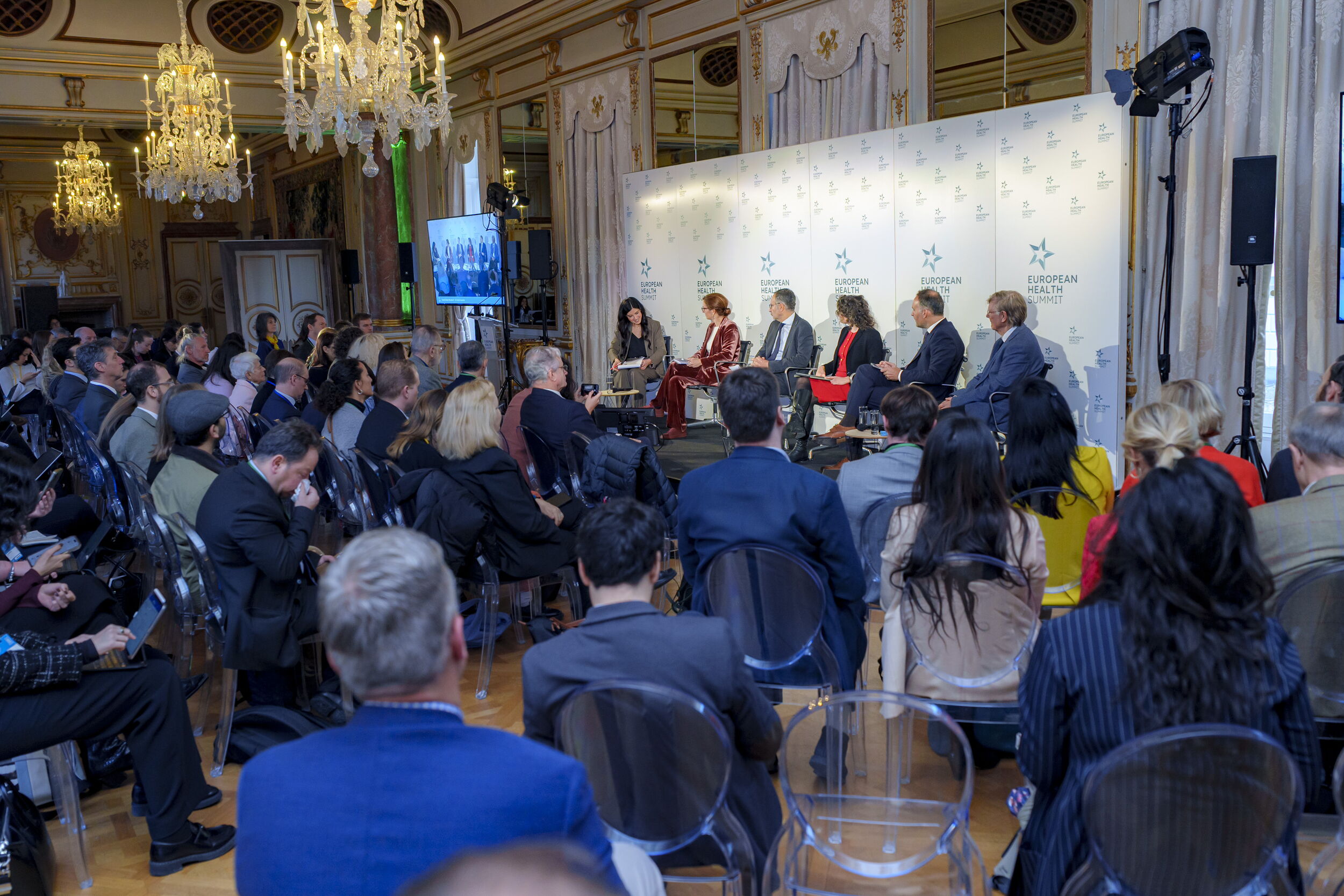
"Planet, Patients, Pathogens: The One Health Reckoning" panel at the European Health Summit
The European Health Summit took place in Brussels on 2–3 December. The high‑level pan‑European forum brought together policymakers, public‑ and private‑sector health leaders, academics, civil society, and industry to discuss and help shape the future of health policy in Europe. Ab Osterhaus, Vice Chair of ESWI, participated in the panel “Planet, Patients, Pathogens: The One Health Reckoning”, alongside Spain’s Minister of Health, the EU Health Emergency Preparedness and Response Authority (HERA), Wellcome Trust and HIPRA.
Europe’s health security is under growing pressure. Antimicrobial resistance, zoonotic diseases and newly emerging pathogens are no longer distant risks — they are already shaping how vulnerable we are to the next pandemic. That is why the One Health approach, which links human, animal and environmental health, is becoming unavoidable rather than optional.
Vaccines, diagnostics and cross-sector collaboration are clearly part of the solution. However, as discussions at #EHS2025 made clear, none of this will work without long-term political commitment, sustainable funding and genuine coordination. Turning the One Health vision into reality will take more than good intentions.
Several speakers underlined the need for integration. Ab Osterhaus, Vice Chair of ESWI, delivered a clear warning: while the next pandemic is impossible to predict, it is likely to be zoonotic. Early detection of animal viruses, strong surveillance systems and long-term, sustainable funding are non-negotiable if lives — and resources — are to be saved. He also highlighted the need for centralised coordination across Europe, as well as the inclusion of vulnerable countries beyond the EU in a truly resilient pandemic defence system.
Spain’s Minister of Health, Mónica García Gómez, stressed that One Health policies only work when ministries collaborate across sectors and borders. Laurent Muschel from DG HERA emphasised the importance of surveillance systems and targeted vaccines, pointing to blind spots such as avian influenza and neglected tropical diseases that continue to leave Europe exposed. From an industry perspective, Carles Fàbrega of HIPRA highlighted vaccines as a practical alternative to antibiotics and stressed how critical rapid response capacity will be in the next crisis.
The policy gap was a recurring theme. Beth Thompson from the Wellcome Trust warned that scientific knowledge alone is not enough — particularly when it comes to antimicrobial resistance. Research must be translated into concrete, actionable policies, especially in developing countries where the AMR burden is highest.
The message was clear: Europe must act now. One Health cannot be a temporary slogan or a crisis response — it has to become a lasting political priority, ensuring that preparedness is proactive rather than reactive.