Implementation of adult and risk groups national immunisation programmes
Tue 21 Oct 2025, 14:00-15:30, Auditorium 3 - Breakout, Valencia
Ted VAN ESSEN, ESWI Board Member, Netherlands
George KASSIANOS, ESWI Board Member, United Kingdom
Yoonsun YOON, Korea University Guro Hospital, South Korea
Juan Manuel FERNANDEZ MUÑOZ, Ministry of Health of Mendoza, Argentina
Marco DEL RICCIO, University of Florence, Italy
Oleg BENES, WHO RO for Europe, Denmark
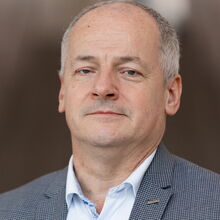
Roman PRYMULA, ESWI Board Member, Postgraduate Medical School, Czechia
Florian KRAMMER, ESWI Board Member, Medical University of Vienna, Austria
Featuring:
Nationality: Dutch
Position: Retired General Practitioner and vocational trainer, Amersfoort, The Netherlands
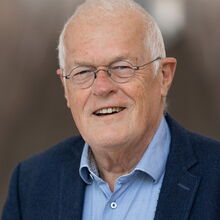
Research fields: Clinical aspects of influenza vaccination
ESWI member since 2001
Dr. van Essen became a General Practitioner in 1976 and Vocational Trainer in 1981 based in Amersfoort, the Netherlands. He was also Assistant Professor (since 1992) at the Julius Center for Health Sciences and Primary Care, University Medical Center, Utrecht. Dr Van Essen obtained his degree at the University of Groningen (M.D. and G.P.) and at Utrecht University where he received his Ph.D.
He is chair of the Dutch Influenza Foundation. From 2000-2004, he was also the President of the Dutch College of General Practitioners. From 1996 to 2000 he was editor of Bijblijven, a Dutch CME-Journal.
Known on TV as Dr Ted, he is well known in The Netherlands for his work as a TV doctor, providing his medical insights for a wide and varied national audience. He was a member of the board of several leading healthcare institutions, including the Supervisory Board of Dimence, a large mental healthcare institution in Overijssel.
- Implementation of adult and risk groups national immunisation programmes
- Intervention Strategies: Bonus Episode - Busting myths and restoring trust in vaccines
- Can COVID-19 vaccines be trusted when they have been developed so quickly?
- When is the best time to get vaccinated for influenza?
- test
- How to be an inFLUencer: the role of a general practitioner
Nationality: British and Cypriot
Position: Family Physician. National Immunisation Lead Royal College of General Practitioners. President British Global & Travel Health Association.
Research Fields: Primary Care Vaccinations
Dr George Kassianos is a GP and the National Immunisation Lead of the Royal College of General Practitioners of which he is a Fellow. He is also President and Fellow of the British Global and Travel Health Association (BGTHA) and Fellow of the Faculty of Travel Medicine at the Royal College of Physicians and Surgeons Glasgow (RCPSG), the International Society of Travel Medicine (ISTM), the European Society of Cardiology (ESC), the British and Irish Hypertension Society (BIHS), The Academy of Medical Educators, and the Higher Education Academy.
Dr Kassianos is Chair of RAISE [Raise Awareness of Influenza Strategies in Europe], a Pan-European Group (20 countries) on influenza, and Board Member of the European Scientific Working Group on Influenza (ESWI). He has served as medical editor of four medical journals, currently serves on a number of editorial boards, and is Associate Editor (Primary Care) of ‘Drugs In Context’ international journal.
Dr Kassianos was the recipient of the Royal College of General Practitioners’ Foundation Council Award (2018), the most prestigious award for services to the College and General Practice.
In October 2020, Queen Elizabeth II appointed Dr Kassianos Commander of the Order of the British Empire (CBE) for his services to General Practice and Travel Medicine.
- Implementation of adult and risk groups national immunisation programmes
- ESWI invites coalition partners: Life Course Immunisation: A Seamless Approach to Protection Across All Ages
- Why not a 95-95-95 strategy for influenza by 2030?
- Why vaccinate from a very early age?
- The influenza landscape and vaccination coverage in older adults during theSARS-Cov-2 pandemic: data from Several European Countries and Israel
- Immunisation & Treatment - Travel preparedness and vaccinations
- Influenza Vaccines: What Does the mRNA Platform Have to Offer?
- Reaching for New Heights: Breaking Down Influenza Trends and Prevention Efforts
- Impact of General Practitioner Education on Acceptance of an Adjuvanted Seasonal Influenza Vaccine among Older Adults in England
- What COVID-19 Vaccines Can and Cannot Do: Setting Realistic Goals in the Current Pandemic
- Vaccinations to consider before, during, and after pregnancy
- Childhood Influenza Vaccination and treatment in a COVID-19 era
Marco Del Riccio is a Medical Doctor specialized in Public Health and Preventive Medicine at the University of Florence, where he currently serves as a Researcher and Assistant Professor. He is also a Guest Researcher at the Netherlands Institute for Health Services Research (Nivel), where he initiated his PhD journey in collaboration with Dr. John Paget. As a PhD candidate, his research explores the impact of the COVID-19 pandemic on the epidemiology and burden of respiratory viruses, as well as preventive medicine strategies. He is completing his PhD at Radboud University Nijmegen under the supervision of Prof. Dr. Aura Timen. He is a member of the Scientific Secretariat of the Adult Immunization Board and other national and international initiatives, including the Global Influenza Initiative (GII) and the Steering Group on Influenza Vaccination. He is also part of the Board of the National Working Group on Communication for Public Health of the Italian Society of Hygiene, Preventive Medicine and Public Health. He is author of over 70 scientific publications in international indexed journals and his main research interests include the epidemiology, burden of disease, and prevention strategies for respiratory infections, as well as vaccine hesitancy and vaccine literacy.
Nationality: Austrian
Position: Professor of Vaccinology at the Department of Microbiology at the Icahn School of Medicine at Mount Sinai (New York, USA) and Professor of Infection Medicine at the Medical University of Vienna (Austria)
ESWI member since 2022
Florian Krammer, PhD, graduated from the University of Natural Resources and Life Sciences, Vienna. He received his postdoctoral training in the laboratory of Dr. Peter Palese at the Icahn School of Medicine at Mount Sinai, New York working on hemagglutinin stalk-based immunity and universal influenza virus vaccines.
In 2014 he became an independent principal investigator and is currently the endowed Mount Sinai Professor of Vaccinology at the Icahn School of Medicine at Mount Sinai. He is also the co-director of the Center for Vaccine Research and Pandemic Preparedness (C-VaRPP). Furthermore, since 2024, Dr. Krammer is Professor for Infection Medicine at the Ignaz Semmelweis Institute at the Medical University of Vienna.
Dr. Krammer's work focuses on understanding the mechanisms of interactions between antibodies and viral surface glycoproteins and on translating this work into novel, broadly protective vaccines and therapeutics. The main target is influenza virus but he is also working on coronaviruses, flaviviruses, hantaviruses, filoviruses and arenaviruses. He has published more than 400 papers on these topics. Since 2019, Dr. Krammer has served as principal investigator of the Sinai-Emory Multi-Institutional Collaborative Influenza Vaccine Innovation Center (SEM-CIVIC), which develops improved seasonal and universal influenza virus vaccines that induce long-lasting protection against drifted seasonal, zoonotic and future pandemic influenza viruses.
- Human monoclonal antibodies that target clade 2.3.4.4b H5N1 hemagglutinin
- Implementation of adult and risk groups national immunisation programmes
- Characterization of the glycoproteins of novel fish influenza B-like viruses
- Next-generation seasonal influenza virus vaccines need a neuraminidase component
- Flu vaccines - advancements, challenges, and global impact
- What is the difference between monovalent and polyvalent vaccines?
- How are vaccines made?
- A chimeric haemagglutinin-based universal influenza virus vaccine boosts human cellular immune responses directed towards the conserved haemagglutinin stalk domain and the viral nucleoprotein
- The Nomadic Life of a Scientist
- Is eradication of influenza B viruses possible?
- SARS-CoV-2-infection- and vaccine-induced antibody responses are long lasting with an initial waning phase followed by a stabilization phase
- Sequential vaccinations with divergent H1N1influenza virus strains induce multi-H1 cladeneutralizing antibodies in swine
- We need to keep an eye on avian influenza
- Universal flu vaccines – soon a reality?
- Why Are Lots of Kids Likely to Be Sick This Holiday Season?
- Assessment of a quadrivalent nucleoside-modified mRNA vaccine that protects against group 2 influenza viruses
- 8th International Influenza Meeting
- Childhood Influenza Vaccination and treatment in a COVID-19 era
Nationality: Czech
Position: Professor of Epidemiology, Charles University, Prague; and Chair, School of Public Health, Postgraduate Medical School, Prague
Research fields: Preventive medicine, clinical development of new vaccines (pneumococcus; rotavirus; measles, mumps, rubella (MMR); and human papillomavirus)
ESWI member since 2013
Professor Roman Prymula holds the position of Professor of Epidemiology at the Charles University in Prague, School of Medicine Hradec Kralove, Department of Preventive Medicine and Chair of the School of Public Health, Postgraduate Medical School Prague at the same time.
He received his medical degree from Charles University, Prague in 1988 and his PhD from Purkyne Military Medical Academy, Hradec Kralove in 1999. Prof. Prymula also studied at the University of Birmingham, UK, where he completed an International Certificate in Hospital management in 1995. In 1996 he became associate professor of epidemiology.
He has been involved in various research activities in preventive medicine, including clinical development of new vaccines, such as those for pneumococcus; rotavirus; measles, mumps, rubella (MMR); and human papillomavirus. In addition to his active research and teaching activities, he has served as a member of the European Centre for Disease Prevention and Control (ECDC) management board, Chairman of the Central European Vaccination Awareness Group, and Chairman of the Czech Vaccinological Society JEP.
Prof. Prymula is on the editorial board of several scientific journals and serves as a consultant for several national and international organisations. He is the former Minister of Health in the Czech Republic.