From Spillover to the Brain: Understanding Zoonotic Viruses Across the Life Cycle of Infection
Welcome to the ESWI Airborne series Shaping the Future of Respiratory Virus Research.
Our guests in this fascinating episode are early career scientists active in opposite ends of the infection spectrum – one scientist is a virus hunter, tracking viruses in urban environments, while the other investigates how viruses invade and attack our most vital organ, the brain. Together they reveal the hidden connections between environmental surveillance and neurological consequence.
They explore and discuss the importance of surveillance and pathogenesis and why preparedness depends on both. We learn about neurovirulence and the different ways viruses can enter and damage the brain. Questions pondered include why neurological damage is overlooked in the human population and whether our cities are blind spots for emerging zoonotic diseases.
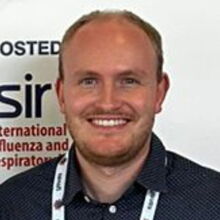
Nico Joel Halwe, Postdoctoral Researcher in virology Ludwig Boltzmann Institute for Science Outreach and Pandemic Preparedness, at the Medical University of Vienna, Austria.

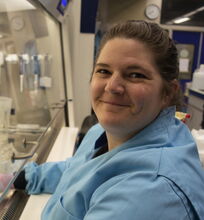
Lisa Bauer, Assistant Professor in neuroscience and virology at Erasmus MC, Rotterdam, the Netherlands.

Opening And Series Context
Aida Bakri 0:00
Welcome to ESWI Airborne. In this series featuring our early career scientist community, we explore how the next generation is shaping the future of respiratory virus research. This series is made possible thanks to the kind support of CSL Seqirus and Sanofi Pasteur.
Meet Nico And Lisa
Jane Barratt 0:39
I'm Jane Barrett, and it is a pleasure to host today's conversation. As part of our early career scientists series, today we'll be talking to two researchers working at different points along the same continuum of risk. They're going to explore why zoonotic viruses remain central to global health security and why preparedness requires both early detection and a deep understanding of what happens once a virus enters the human body. Today's session follows that arc from environmental surveillance to neurological consequence and asks what true preparedness demands. Let me introduce our speakers for today. The first, Dr. Nico Halwe. Nico is a virologist working at the intersection of urban ecology and pandemic preparedness. He's based in Vienna and studies viruses circulating in urban wildlife, particularly rodents and birds that live alongside us in cities. Using advanced genomic sequencing and citizen science approaches, he detects both known and previously undiscovered viruses before they emerge as public health threats. His focus is early warning. By mapping how newly identified viruses relate to known high-risk pathogens, he assesses their zoonotic potential and supports more informed risk evaluation before these outbreaks occur. So we welcome Nico to our conversation today. Next, I'd like to introduce Dr. Lisa Bauer. Lisa is a neuroscientist and virologist who studies how viruses invade and damage the brain. Her research examines pathogens such as avian influenza and SARS-CoV-2, focusing on how they infect different brain cell types and trigger neurological disease. Her work centers on consequence. She investigates why some viral strains cause severe neurological complications while closely related strains do not, and whether damage is driven primarily by the virus or the immune response. So welcome to you both, Nico and Lisa. How are you today?
Nico Joel Halwe 3:16
Thanks for having us. So I'm I'm very excited to be here. And thanks for the invitation.
Lisa Bauer 3:22
Good. And Lisa? Yeah, thanks. I think it's really cool. And I mean, today I'm sitting in Rotterdam, so today we have 17 degrees in sunshine, so it couldn't be a better weather, actually.
What Urban Wildlife Sampling Finds
Jane Barratt 3:32
Well, it's it it sounds like it's perfect weather. Um, so welcome to you both. Nico, I really want to start talking with you about this urban interface and you know, with the focus on early warning and surveillance science. So the first thing that we need to know really is when you're sampling urban wildlife, what are you actually finding? Are most viruses benign or are there consistent signals that we need to be concerned about?
Nico Joel Halwe 4:02
That's actually a very good question because, and and I have to say, actually, I cannot answer that yet right now because the past month it was actually pretty busy, or we were pretty busy with setting up a lab in Vienna from scratch, so we had no infrastructure at all. And we are currently at a stage where we are finally able to dissect uh rodents from the urban wildlife and see what's in there. So so far we haven't we haven't been able to start yet, but the first rodents that we uh and samples that we get are coming at the end of this week, and then um we can we can find out and we investigate more. But of course, we have we have some ideas um of what we what we can expect. So there were a lot of um cases with influenza viruses, of course, in in the past in wildlife detected, but also Pumala Auto Hunter virus was a major cause of infection in in rodents, but also human cases in the past. So we expect these viruses to be present also in in the urban wildlife that we are sampling, but we also of course want to know which which kind of viruses are new and which which have not been found before. So this is what we what we are going to do.
Jane Barratt 5:16
Yeah, well, congratulations on setting up your your lab. That's uh that's a great step forward. You know, in your experience though, you know, could you give us a sort of flavor of whether most viruses are benign or are there consistent signals or don't we know that yet?
Nico Joel Halwe 5:36
Well, it's a difficult question, actually. I think we still have to find out, especially in Austria. So um, yeah, we really have to, I think we just have to start and and see what we find and what we what we can expect.
The Routes Viruses Reach Brain
Jane Barratt 5:50
Look, thank you for that. So we're really waiting on the precipice for this. But Lisa, you've been studying, you know, neuro invasion and clinical consequences for quite some time. So could you explain to us when a virus invades the central nervous system, what determines whether disease is going to be mild or severe?
Lisa Bauer 6:13
Yeah, so there's actually multiple factors. And I think uh the the first, we really have to look at the word invade. So, what does this actually mean? And with neuroinvasion, we actually mean that the virus can enter the brain through cranial nerves or peripheral nerves, or it can also happen through the blood. And that determines, for example, if you have a respiratory virus or a gastrointestinal virus, how it can enter the brain. And I think it's very nice to, or it's it's good to see on the example of SARS-CoV-2 and influenza viruses, because they do replicate in our nose. And within our nose, for example, we have two different types of sites where they replicate. One we call the olfactory mucosa. And this is very interesting because there we have neurons that protrude into our nasal cavity and actually sample the environment. And if a virus can infect that, and this has been shown, that SARS-CoV-2 and influenza viruses replicate the two quite high titers, they have a shortcut to the brain. So that's actually quite concerning if we see that a virus has a preference for the olfactory pathway. However, we also have other viruses, as for example, I think a beautiful example is poliovirus that can uh enter the spinal cord, so um through motor neurons, and actually through the spinal cord travel up into a brain. So you already see that in these cases it is not so easy to actually determine whether this leads to a mild or severe disease.
Jane Barratt 7:54
You know, that's really fascinating. You know, you talked about you know cranial, peripheral, and then blood. So there are different pathways. And and you know, the word fast track really took my attention. You know, the the olfactory pathway is a fast track. Um so you know, when in in practical terms, you know, what's the message for people in the general community when it comes to you know viruses?
Lisa Bauer 8:26
Yeah, I I I think the message is that it can depend on the way the virus enters the brain, whether it has consequ whether it has more severe consequences or not. However, the whether a virus invades the brain alone is not sufficient to tell us that. So we actually need to understand more. But the neurovision is just the first step.
Genomic Red Flags For Spillover
Jane Barratt 8:50
Oh my goodness, it's that's fascinating. Look, I'll come back to you, Lisa, and and ask you another another question on that. But it it Nico, I'm I'm coming back to you again in terms of you know the zoonotic potential of previously unknown viruses. Um now, your work really looks at genomic sequencing. So, can you give us any indication of what the genomic or ecological characteristics, you know, red flags are when you're looking at um zoonotic potential?
Nico Joel Halwe 9:26
Yeah, of course. Um, so definitely genomic sequencing is basically the first step that we that we want to do. And it's very important, and there are certain things that definitely from from scratch, and what when we see it, definitely uh we can we can already know that this might be something that could cause disease severity or um better transmission. For example, with um SARS-CoV-2, we had this polybasic cleavage site. This is also something that uh, or polybasic cleavage site is also happening and occurring in in H5 and 1, uh, avian influenza. So um, these are certain indications that already suggest that this might be a virus that um is capable of doing um yeah bad things in in vitro and in vivo. But uh we're not just looking at genomic sequences, so we really want to want to have this approach of virus discovery as first step to really identify new viruses and then go a step further and really um yeah, isolate these viruses or generate these viruses by reverse genetics and in then in-depth uh characterize these viruses in vitro and in vivo to really get an idea of um how um yeah of the zoolontic potential because it's it's necessary to just uh characterize these viruses and not just detect it to get an idea of how dangerous these really are.
Why Cities Are Surveillance Blind Spots
Jane Barratt 10:56
You know, you you mentioned this this term of discovering viruses. You know, if I think about the current surveillance systems, what are the major blind spots in our current systems, particularly in cities? Because, you know, your work has a tremendous public health um implications, you know, from the from the position of identifying viruses and then ensuring that we have the right public health messages. So what are the major blind spots in the current systems of surveillance?
Nico Joel Halwe 11:33
I think I think what is primarily neglected often is really the city itself, because uh most most surveillance efforts really focus on like more rural areas in, for example, jungle with exotic species, to see which kind of viruses are circulating there. But really, efforts to detect viruses in in urban environments is is kind of something that is neglected most of the time. And that's where we exactly want to step in because um there are often situations where people in the city itself um are coming in contact with animals sometimes also without even knowing. So with bird droppings on a park bench or like I don't know, a rodent running around in a garage where you just uh sweep the floor afterwards. Uh there are uh studies with bornavirus infections uh that may be happening uh based on these kinds of incidents. Uh so a lot of things inside the city itself are not really uh considered. And uh yeah, we want to find out where are the threats there and and how can we address this by by knowing which or shedding more light on what is circulating in the city in the in the wildlife.
Jane Barratt 12:53
We certainly don't um we we don't have readily available public health information on what you're talking about, you know, bird droppings or rodents. You know, I think of when where I live in Toronto, you know, raccoons, um, you know, you know, skunks, um, you know, they are in downtown downtown Toronto. Um, and I'm wondering why we don't have this public health information readily available. Lisa, what are your thoughts about that in terms of public health information? Do you know why we don't have it up front?
Lisa Bauer 13:34
Yeah, it's uh I think that's a very good question. And it's also difficult to answer. So I think one of the things is for sure cost, and you need dedicated people to do that, which is not always uh that easy because surveillance, uh, it is more I would say it's more on an expensive side. Uh, we also see it with, for example, with the surveillance of highly pathogenic even influenza viruses, that we have a very suboptimal uh surveillance system, and in the end we focus on regions where you do see disease upcoming, right? Um, so I think we do miss a lot. Um so I think it's really great to have this uh way to look at uh especially urbanization, um, to understand what is out there and what can be a danger to public health.
What Makes A Strain Neurovirulent
Jane Barratt 14:31
And that's why you know you as early career scientists are so important because you you know you're at the front line of this research. So I think it's very important. I I want to talk with you a little bit more, Lisa, about you know, how do strain differences influence neurovirulence?
Lisa Bauer 14:52
Yeah. So I mean, as as uh I think as uh Nico already uh mentioned before, for example, for transmission, you have this poorly basic cleavage site of SARS-CoV-2 that uh showed that uh SARS-CoV-2 was uh more readily airborne transmissible. So also viral factors can actually play a role in understanding whether different strains can cause uh or influence the neovirulence, so to say. And for example, maybe let's take uh let's say with influenza viruses. So we know quite well that uh you have seasonal and influenza viruses, that's these viruses that circulate yearly in the human population, and they also do cause some uh neurological uh complications, but relatively modest. However, if you, for example, look at the highly pathogenic even influenza virus, one of the hallmarks of these differences between these two viruses is that highly pathogenic even influenza viruses have a multibasic leavage site. And we do see that this is, for example, very important to allow these viruses to replicate in neurons. I mean, this is just one point. We also know that uh other gene segments are drivers of an enhanced uh neurovirulence. So with neurovirulence, maybe that's also good to actually define this word. What I mean with this is actually the ability of a virus infection to cause damage to the CNS, right? Um, and this can be the virus can either uh enter the brain, but it must not always enter the brain, right? So you you can have neurovirulence from the virus that goes into your brain, but also from virus, for example, from excessive uh inflammation in the primary replication site. And there are also, for example, some differences between seasonal influenza viruses and highly pathogenic avenue influenza viruses. So you you have different drivers and yeah, receptors can play a difference as we have uh shown with different SARS-CoV-2 variants. So it's certainly important, is uh it is not one sole factor that determines what is the difference in the neovirulent potential between different virus strains.
Jane Barratt 17:08
And and I suppose that someone that has a number of chronic comorbidities, such as diabetes, you know, COPD, um, then they would be at higher risk, you know, uh in in terms of um you know the neuro invasion.
Lisa Bauer 17:28
Yes, uh that's uh that's certainly, but that's more on the on the host side, yes. So of course receptive expressions, uh promorbidities.
Citizen Science With ViroKitty
Jane Barratt 17:37
Uh so uh Nico, I'm I'm interested, you know, what your day-to-day work looks like, and I'm going to ask you too, Lisa, you know, it because what you've talked about is highly sophisticated, you know, scientific research, you know, but you're also talking about areas that impact each and every one of us in the general population. So, Nico, when your lab is up and running, you know, what are you doing in terms of you know the frontline work?
Nico Joel Halwe 18:15
Um, yeah, so um basically uh what we've what we've started right now, uh we're trying to get this public also with my mentor Florian Kramer, um, who um we want to uh reach out to citizens, citizen science project, which is called we named it ViroKitty. So basically we engage with uh um with with citizens from Vienna that they notify us when uh their cat brought home a rodent, for example, or a small bird, so that they contact us and we will uh uh pick them up from their home, basically, take it to the lab, dissect it, and then do our uh surveillance and uh virus discovery approaches to hopefully see and detect new viruses and then uh down um downstream basically also do what I what I've just mentioned with um virus isolation attempts and characterization of these viruses in vitro and in vivo. So we really want to want to involve the the citizens uh directly in the science part. We want to also get back to them when we have results to tell them what we found out so that we have yeah, so that we get a little bit more trust uh from the citizens, uh which was especially since the COVID-19 pandemic is very, very important, uh I would say.
Jane Barratt 19:36
You know, you know, you're you're really engaging with the general public, and that's part of public health education, isn't it? So as well as the scientific research, you're really educating the general public uh as well. So just just remind the audience once again, what's the title of of this campaign?
Nico Joel Halwe 19:57
Uh the the project that's started is ViroKitty. You can you can find it online on our website from the LBI soap. It's basically called ViroKitty.
Virus Damage Versus Immune Damage
Jane Barratt 20:08
Okay. So what we'll do is we'll make sure that we have that uh that that link because I think it's very important, not only in your country, but you know, around the world, the audience actually has access to to what's what's happening. So I'll go back to Lisa and I'm fascinated. I want to know, is neurological damage primarily driven by the virus itself or by the host immune response? Or is it I know what you're gonna say, Lisa. You're gonna say, well, this is complicated. So tell us, you know, give us your give us your give us your best version of what we could expect.
Lisa Bauer 20:51
It is both. I think the the answer is quite easy in this case. It is both. And I mean, first, it really depends whether the virus can replicate in neurons or not, or in other cell types of the CNS. Because I think if the virus productively replicates, like for example, uh highly pathogenic uh H5N1 virus, it very fast spreads uh through the whole brain, and this fast spread causes a massive inflammation within the brain and just a shutdown of the whole brain function. I think what is more interesting is for example SARS-CoV-2 or seasonal influenza viruses, because there what you see is a little bit something different. It's a hit and run model. So the virus enters the brain but is restricted in the growth, so it cannot spread throughout the brain. And then the host, of course, tries to get rid of this infection, um, which at some point the host detects, of course, this one or two uh infected uh neurons and tries to get rid of them. And at the moment, what we Do see is that you actually often what often results, especially if we think of long COVID, that you have a hyperactivation of the immune system, and then you also produce auto antibodies that that uh can exacerbate uh the disease, for example, auto antibodies against interferon, it's uh uh a molecule that antagonizes uh viruses or other uh cell types. So, but yeah, it's it's it's certainly both. So in on the other hand, it can also be driven mostly by the host. So, for what I mean by that, if we if we now think of a virus that doesn't enter the central nervous system, what can happen? So the virus replicates in our lungs, we have an excessive inflammation, and through the blood, at some point the blood will cross uh in into close proximity to the brain. And what these cytokins and anti uh inflammatory responses can do, they actually can weaken the blood-brain barrier to easily allow the uptake uh of compounds, toxic compounds or viruses. So, as I said, it really can be both.
Neurological Risks People Miss
Jane Barratt 23:11
You know, we've heard from Nico that um you know there's probably a lack of awareness, you know, around the potential impact of zoonotic viruses, you know, in in um in cities. When we come to learn about the impact of avian influenza and SARS-CoV-2, are the neurological risks being underestimated in the community and public health in general?
Lisa Bauer 23:39
Yes. That uh is for sure. I mean, I I I think that also So I think the problem actually starts that we do not really know the frequency of how often these viruses enter the CNS. Right? I mean, in if you go, for example, if you take cats as sentinel, they often uh eat dead carcasses, so the viruses replicates in the olfactory mucosa, easily spreads to the brain very fast, uh, very, very fast, and causes often uh death uh because of these neurological symptoms, and a lot of other animals also develop neurological symptoms. So I think it is there, but I'm I'm actually not really sure why this is not comprehensive also in the human population, that you can get this neurological uh understanding because we always often what you actually see is that if if the virus has a has a certain reservoir and it causes, for example, their neurological complications, if it spills over to a new reservoir, you often see that actually the symptoms are very similar at the size of the replication. So I'm actually not really sure why often neurological complications are, I would rather say overlooked, not rather underestimated.
Linking Genotype To Real Harm
Jane Barratt 24:57
No, they're they're certainly, certainly overlooked, as are, you know, zoonotic, the potential of zoonotic viruses. I just want to ask both of you just one really important question, because I often talk about the importance of cross-sector and cross-discipline cooperation and partnerships. So if there was one interface that you could strengthen between your disciplines, what would it be? Perhaps if we start with you, Lisa, and then we'll go to Nico.
Lisa Bauer 25:27
I think what would be really interesting would be a genotype to phenotype classification. So you actually understand the genome of these viruses and you kind of can hypothesize whether that would lead to neurological uh symptoms or not. And I think that's really uh something uh what we need to work on, especially for pandemic preparedness.
Nico Joel Halwe 25:49
Definitely. I I I couldn't I couldn't agree more. So that's that's definitely the the way to go. So detecting new things, the first thing that you have is a sequence, and then from there on you have to see what can it do and and um how dangerous could it be. So basically, really characterization is I think a topic that we both uh are interested in and which is very important. And this of course uh yeah includes the neuroinvasion because it's often it is like if it invades the the CNS, then we have a very severe disease. So um it's very important to really characterize new uh viruses when we discover them.
Takeaways On Preparedness And Consequence
Jane Barratt 26:31
Oh, look, thank you. Um as we're coming to the end of the podcast, I want to come back to both of you and ask you what is your takeaway message for the audience that's listening to this fascinating conversation? So, Nico, what do you want, you know, the um the audience to to take away from you know what you've talked about today?
Nico Joel Halwe 26:56
Yeah, basically, so this is maybe basically uh one one uh thing that I already touched upon on. Uh so people I think often forget that zoonotic viruses are not only circulating in in the exotic environments, so just in jungles or in in in uh fruitbed colonies in Africa or in in several animal species in China, but it can be also in Germany, in Austria, in the Netherlands, wherever you are. Um so it can be right outside uh your apartment. And I think it's important to just be aware of the environment, uh, take it carefully, and it's also I think a good idea to wash your hands now and then.
Jane Barratt 27:35
You know I I think that's really good basic public health, but you know, raising the awareness of just be conscious of your environment and the consequences of infections, you know, outside your apartment and perhaps even inside your apartment. So, Lisa, what's your takeaway message?
Lisa Bauer 27:58
My takeaway message is that uh a lot of different viruses, even though the respirator the replicate maybe in the gastrointestinal tract and the respiratory tract can actually spread to extra respiratory tissue, especially also uh to the brain, and that this is often underestimated. And I think the SARS-CoV-2 pandemic, especially with association of long COVID, really highlighted this because I mean, especially long COVID, this is not something new. This post-acute sequela, we already know since the Spanish uh flu pandemic in 1918, or uh polio with post-polio uh encephalitis, or um with measles long-term neurological complications. So this is really not a new concept, but I think maybe it is really time to finally take it serious and to actually understand what do these viruses, if they enter the brain, what do they do in the short term, and what will be the consequences on the long term? Can they lead to neurodenugeneration? And how actually can we fight that? And I think that will be uh very important in the future to understand.
Jane Barratt 29:08
Two very clear closing messages. So today's discussion reminds us that zoonotic risk follows a continuum, it begins in the environments which we share with wildlife, and that doesn't mean in the jungles, as as Nico said, it's it's outside your apartment, or it could be inside. You know, it's in your local environment and can extend deep into the human body through various ways, as Lisa said. You know, cranial, peripheral, blood. Preparedness is not a single action. It depends on early detection and on a deep understanding of the biological consequence. So without surveillance, we are surprised. Without mechanistic insight, we underestimate risk. And both Nico and Lisa have been very clear about currently we underestimate risk. And Lisa made a very good point just now about this is not new. We need to start taking it seriously. True preparedness connects these stages before crisis forces them together. Um, I've had a great time talking with you both, Nico and Lisa, and thank you to our audience for joining as we airborne. And Lisa and Nico, I wish you great success in the future. We need you at the front line, and we also need your messages in public health interventions going forward. So thank you very much for your dedication and your commitment. Thank you.
Nico Joel Halwe 30:45
Thank you so much. Yeah, thanks for the invitation.
Aida Bakri 30:53
ESWI Airborne is brought to you by ESWI, the European Scientific Working Group on Influenza and other acute respiratory viruses. These episodes would not be possible without the team's efforts, and I would like to extend special thanks to our ESWI Secretariat, our technical and IT teams, our arts team, and our host. The podcasts are recorded virtually, and we thank our guests for their participation in this inspiring and educational series. Talks are adapted to a global audience and are intended as recommendations and guiding principles. For any specific medical questions you may have, these should be addressed to your local general practitioner. Many thanks to our sponsoring partners, and thank you for listening.