ESWI Summit 2026
Managing acute respiratory virus infections: Where do we go?
ESWI Summit 2026
Managing acute respiratory virus infections: Where do we go?
The one-day event will bring together leading experts to explore key themes shaping the future of vaccines: innovation in vaccine development; the two-way links between acute respiratory infections and non-communicable diseases (NCDs); strategies for immunisation policy and uptake; the wide-ranging value of vaccines, from economic and social benefits to public health and individual protection; equitable access to immunisation; and effective policy implementation across Europe and beyond.
ESWI Summit provides a trusted space for meaningful dialogue between scientists and policymakers, fostering collaboration to ensure vaccines against acute respiratory viruses reach their full potential and deliver maximum impact.

REGISTER HERE >
... and receive all our Summit updates
Share
Date
Programme
Location
Please find the preliminary programme below.

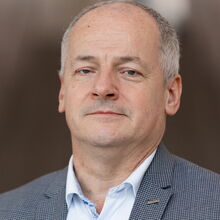
Nationality: Dutch
Position: Founding Director of the Center of Infection Medicine and Zoonosis Research and Guest-Professor at the University of Veterinary Medicine Hannover
Research fields: Virus infections of humans and animals
Professor Osterhaus is the Founding Director of the Center of Infection Medicine and Zoonosis Research at the University of Veterinary Medicine Hannover, Germany, and cofounder/CSO of Viroclinics-DDL BV (currently part of CERBA) and ViroNative BV (both spin-outs of Erasmus MC) and CR2O. He was head of the Department of Viroscience at Erasmus MC Rotterdam until 2014.
He has a long track record as a researcher and project leader of numerous major scientific projects. At Erasmus MC, he has run a diagnostic virology lab with more than 40 staff and a research virology lab with over 150 personnel. His research programme follows an integrated “viroscience” concept, bringing together world-leading scientists in molecular virology, immunology, epidemiology, pathogenesis, and intervention studies for human and animal virus infections.
Among his major accomplishments are the discovery of more than 80 viruses of humans and animals (e.g. human metapneumovirus, coronaviruses, influenza viruses), elucidation of the pathogenesis of major human and animal virus infections, and development of novel intervention strategies. This has enabled health authorities like the WHO to effectively combat disease outbreaks like SARS and avian influenza. The established spin-outs are among his other societally relevant successes, allowing effective testing and refining of diagnostic tools and other intervention strategies.
Professor Osterhaus has acted as mentor for more than 85 PhD students and holds several key patents. He is the author of more than 1360 scientific papers in peer-reviewed journals, together cited > 90,000 times with an H index > 145. He holds several senior editorships and has received numerous prestigious awards. He is a member of the Dutch and German National Academies of Sciences, member of the Belgium Academia of Medicine, and Commander of the Order of the Dutch Lion.
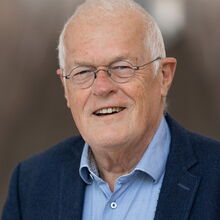
Nationality: American, British
Position: Professor of Applied Evolutionary Biology, University of Amsterdam Faculty of Medicine
Research field: Virus Evolution
ESWI member since 2019
Colin Russell is a professor at the University of Amsterdam School of Medicine. His research focuses on the evolutionary dynamics of human respiratory viruses and the immune responses that control them. He has worked extensively on the within-and-between host evolution of influenza viruses, influenza virus vaccine composition, and issues related to diagnostic and sequencing resource allocation for virus surveillance. Professor Russell regularly advises a wide variety of international organisations, including WHO, on topics ranging from surveillance to pandemic preparedness, vaccine design, and test-to-treat programs. Colin is the Chair of the ESWI since 2023 and the Chair of the EU Steering Group on Influenza Vaccination since 2024.
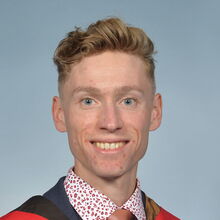
Nationality: Dutch
Position: Intensivist, Spaarne Gasthuis, Amsterdam, The Netherlands; and Senior Scientist, Erasmus MC, Rotterdam, The Netherlands
Research fields: Special interest in acute care and infectious diseases
ESWI member since 2016
Marco Goeijenbier completed his Ph.D. in virology, focusing on "Haemostasis and Virus Infection," at Erasmus University Rotterdam in 2015. He currently serves as a specialist in acute internal medicine and critical care at Spaarne Hospital in Haarlem, The Netherlands. His expertise spans various aspects of infectious diseases, particularly in critical care medicine and viral infections. In addition to his clinical work, Goeijenbier holds a research position at Erasmus MC in Rotterdam, where he mentors PhD students exploring critical care medicine and viral infections. His research interests focus on severe acute respiratory infection (SARI) pathogenesis, epidemiology, and their interaction with the coagulation system.
Some of Goeijenbier’s most published articles include:
Dr. Goeijenbier is ESWI’s lead member and Chair in the Influenza Diabetes Community (IDC). The IDC connects leading diabetes, patient, scientific, and professional organizations around the common aim of protecting persons living with diabetes from influenza and other viral respiratory diseases like COVID-19.
Starting January 2023, Dr. Goeijenbier has taken on the role of Chair of Medical Research and Education at Spaarne Hospital. Furthermore, since January 2024, Marco is the Editor in Chief for Nature Springer Tropical Diseases, Travel Medicine, and Vaccines.
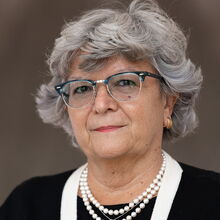
Nationality: Italian
Position: Research Director, CNR Ageing Branch, Neuroscience Institute, Padova (Italy)
Research Fields: Clinical epidemiology and geriatrics. Main focus on lifelong approach to healthy ageing
ESWI member since 2022
Dr. Stefania Maggi received her degree in Medicine and Surgery from the University of Padua, Italy in 1983. She also attended the Graduate School of Geriatrics and Gerontology from the same University until 1987 and in 1988 she received her Master in Public Health from John Hopkins University in Baltimore (USA). Dr. Maggi also holds a PhD in Clinical Pathophysiology from the University of Padua, which she received in 2000.
Dr. Maggi has a specific interest in the epidemiology of ageing and in the analysis of factors promoting health ageing in a lifelong approach. From 1983-1985, Dr. Maggi worked as an attending physician at the Internal Medicine Department for the University Hospital in Padua before she spent the years of 1988-1989 as a postdoctoral fellow at the National Institute of Arthritis and Musculoskeletal and Skin Diseases (NIAMS), for the National Institute of Health (NIH) in Bethesda, Maryland (USA). From 1989-1993, she worked as the Coordinator for the WHO Program on Ageing, before she moved on to work as a researcher in the Ageing branch at the Institute of Neuroscience, Consiglio Nazionale Delle Ricerche (CNR), Padua. Dr. Maggi worked as a researcher from 1993-2007 before becoming Research Director for the same branch and institute, in 2007, a position she currently holds. In this position, she coordinates several national and international research projects on nutrition, vaccines and lifestyle as key factors for promoting healthy ageing. Dr. Maggi is also an Adjunct Professor in the Graduate Schools of Geriatric Medicine at the University of Padua, which she has been since 2000.
Moreover, Dr. Maggi is the Editor in Chief of “Ageing Clinical and Experimental Research” (Springer) and has more than 800 publications, both in peer-reviewed journals and many book chapters.